
The lesson that the sea teaches is that you must sail the wind you have, not the one you wish you had, the one you thought you would have, or the one you “ought” to have.
— Bob & Nancy Griffith, Blue Water
THE BEGINNING & THE TŌHOKU EARTHQUAKE
I set out from Melbourne in December, 2006, on a very simple mission to cycle and sail around the world. It took 14 months to get from Australia to Japan. I left with a few thousand dollars in the piggy bank and arrived broke. Knowing that I would have to stop and work somewhere, I aimed for Japan, because out of all the countries that I had travelled and lived, Japan was my favourite.
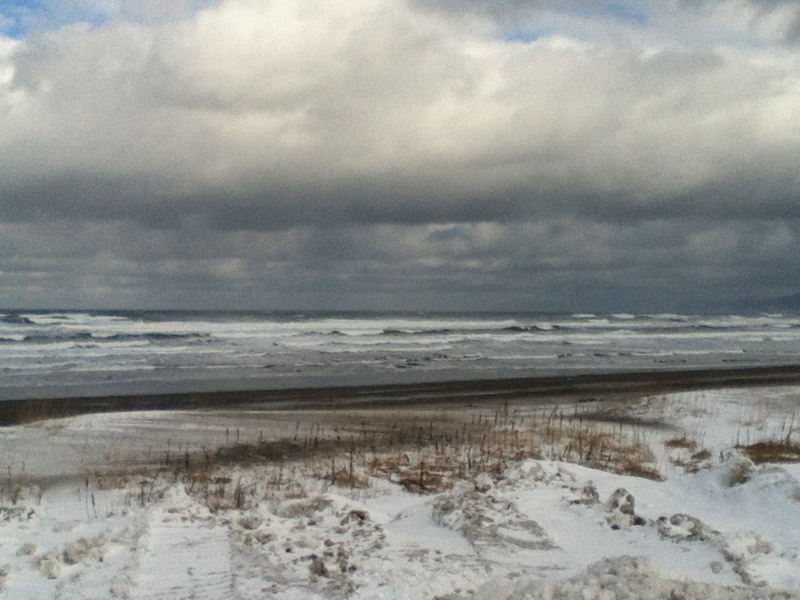
Between 2008 and 2011, I was working in rural, northeast Hokkaido. Then the Tōhoku earthquake and tsunami hit the last day of the school year, which was also the last day of my annual contract. After attending the junior high school graduation ceremony, I returned to the staffroom where a group of teachers stood in shock at the TV. Arial video showed the Pacific ocean spilling ashore along the eastern coast of Honshu and Hokkaido, demolishing towns and villages, and washing people out to sea. In the corner of the screen, the emergency tsunami map flashed red and orange sections of coastline stretching all the way north, up and around the Shiretoko Peninsula, to my stretch of beach. It was the strongest earthquake in Japan’s recorded history. It never occurred to me until then why my school (as with many schools in coastal Japan) was built up the hill and above the village. Whilst this saved the lives of school children living along the east coast of Honshu, many of them were orphaned on that day.
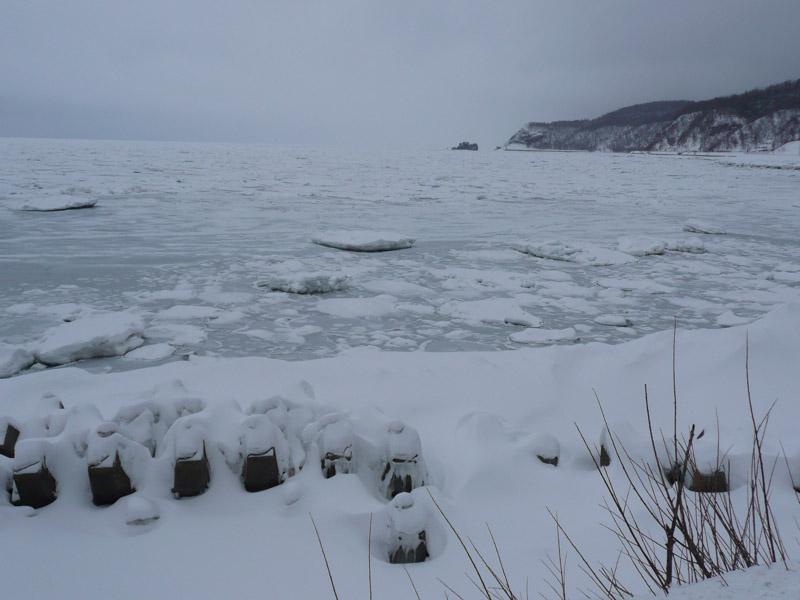
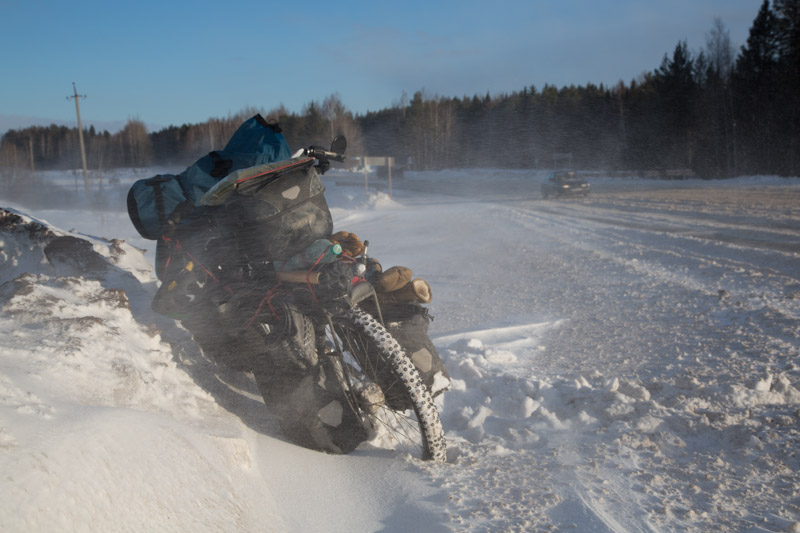
The next day, the Fukushima Daiichi Nuclear Power Plant blew up and burned for weeks. The risk of exposure to fallout seemed real enough. Government travel advisories were posting daily wind forecasts on their homepages to advise when to stay indoors. It was unnerving, heartbreaking. Having planned on staying a fourth year in Japan, I hadn’t yet prepared to continue the journey, but within the chaos of information about the nuclear disaster, I reasoned it was time to reboot the expedition. All considered, it seemed prudent to reroute away from the meltdown, and head north into the Russian Far East. On a clear day I could see the Kuril Islands across the Sea of Okhotsk, and I’d often thought about taking the route through Russia, but now it was no longer a choice. And if it was going to be Russia, it was going to be Russia proper—I had to experience the Siberian winter.

CYCLING ACROSS RUSSIA
I had done practically no homework. I didn’t speak a word of Russian, had no contacts, and no knowledge of the regions I’d be travelling. I had no time for any of that. The little time I did have was consumed by solving the visa problem, working out the logistics of timelines and border crossings, and preparing for the winter. Route planning went no further than printing out wildly inaccurate Japanese Imperial Survey maps from the 1920s of Eastern Siberia and Sakhalin Island. I had never known a single Russian or anyone who had actually been there (with the exception of one Japanese adventurer who I met up with in Yokohama a few days before departure). Online travel forums revealed nothing except for some vague and conflicting details about visas and entry points. So it stands to reason that I knew bugger all about Russia before I arrived in Yuzhno-Sakhalinsk at the start of 2012. It may as well have still been the Cold War with that rusty old Iron Curtain blocking the view. How could the largest country on earth be so untravelled and so unknown?
Well, there may be good reason for that. It’s an authoritarian state, therefore it’s inherently touchy about aliens travelling freely within its borders, alas, it’s prohibited to do so. But where there’s a will, there’s a way. And despite family and friends saying goodbye like it was going to be the last time they would hear from me, I was far too seduced by the unknown to fear it, because in Adventurelandski, the less you know, the more you discover.
The closest I came to insider knowledge was from an elderly Ukrainian woman who genuinely advised, ‘If you ever get invited into a Russian home, don’t go, because they will slit your throat and rob you’. Sounds fun! (This was a decade before Putin’s Special Military Operation.) What was actually worrying was when bona fide Russians in the Far East expressed grave concerns for my safety, for which the top three were (in no particular order): the cold, the predators, and the bandits—although it may have been implied that my stupidity was the number 1 risk, but I prefer to rank that in 4th place. Since I am writing this, and you are reading it, we can assume that I survived these perils.
The Western perspective is extremely limited. During my entire time in Russia, I never crossed paths with another foreigner. In the second winter, however, I did receive messages from some Japanese friends reporting news of a Japanese cyclist who was travelling in the west. Tragically, he had been struck by a car and killed. Far from the cold emptiness of Siberia, those winter roads in the west are no joke. I remember feeling pretty sad and isolated when I heard that.
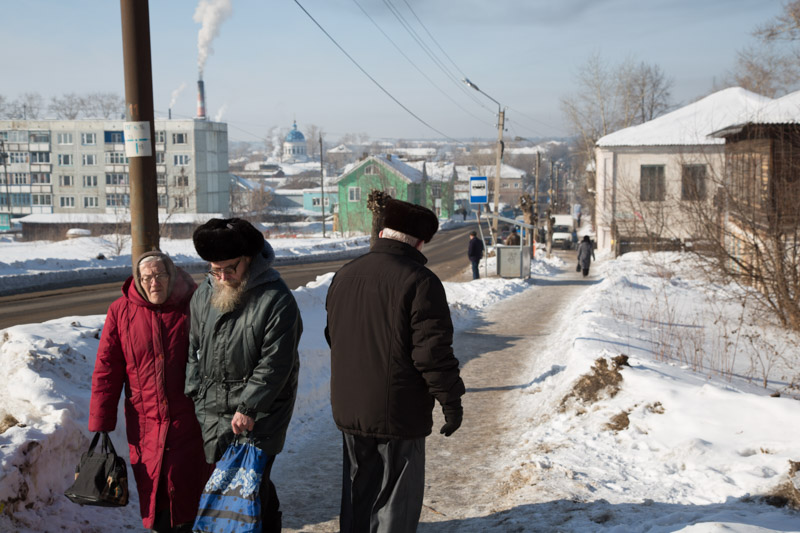
Russia is both extraordinary and perplexing—extraordinary in its scale and its beauty and the spirit of its people; perplexing in its corrupt incompetence. Russia could be like Norway—it could be the most prosperous country on earth. But instead the ruling elite (and the gangsters) choose to loot the country’s natural wealth and infrastructure, over enriching and empowering its people. Apparently life was better for many when it was under the hammer and sickle.
When I was travelling on the supply track for the construction of the gas pipeline in the Far East, I met a guy called Dmitry, who remains a friend to this day. I asked him if the local people benefited from the gas pipeline, cos it sure as hell didn’t look like it. ‘No man,’ he said. ‘All that gas and oil they’re taking from the strait, none of that money stays here. 90% of the wealth of this country goes to Moscow. That’s what these people are complaining about (snowplow operators responsible for maintaining the track). They are poor. You see it in the villages. They have nothing.’
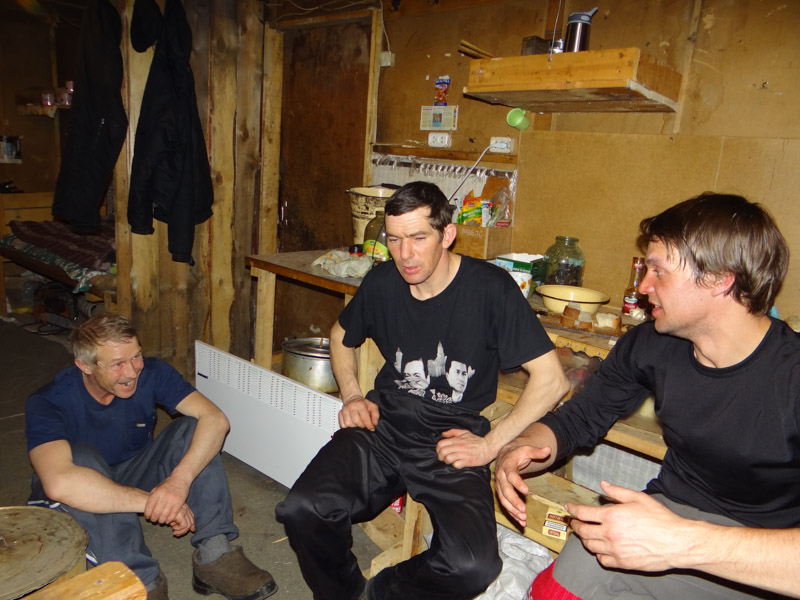
I didn’t see the overlords, but I saw the poverty and the alcoholism that results from a hopeless system; men loitering outside stores waiting for comrades to pitch in for a bottle of vodka, from which they would calculate the split by counting the chugs of air in the upturned bottle as it decanted into their respective containers. I heard about the casualties of winter, indigents who would pass out drunk, only to freeze to death in the streets. But the Russians as a whole are a beautiful people. They treated me like family, and my journey would have been a lonely experience if it wasn’t for their friendship and support along that bumpy road.



STRUGGLES IN EUROPE
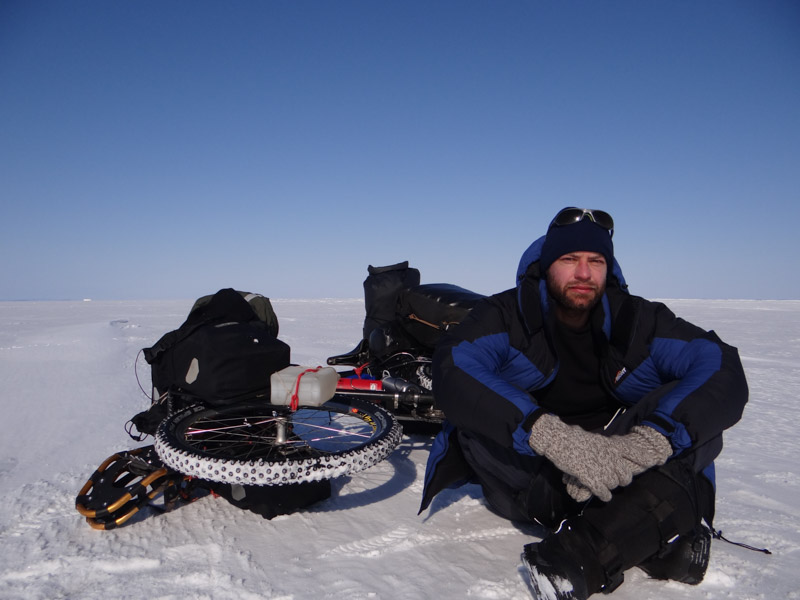
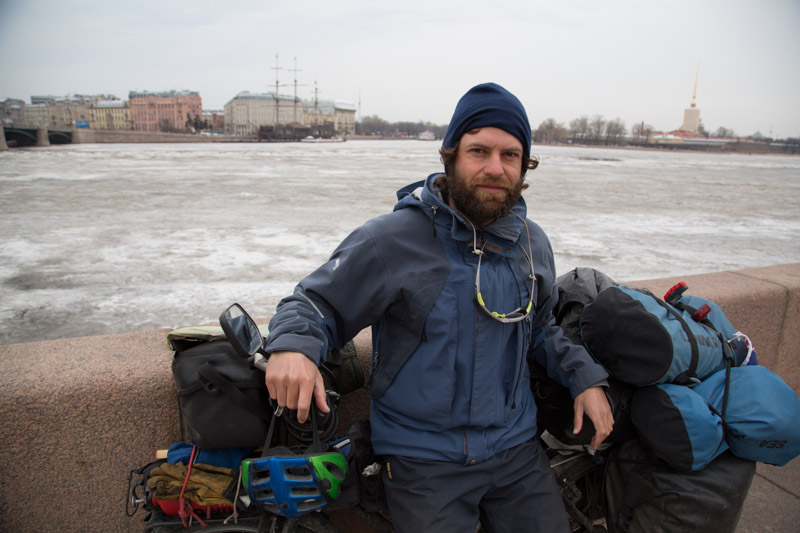
It took me 15 months from Sakhalin Island in the Pacific, to reach the border with Finland. (10 weeks of the route took me through Northern China, followed by 9 weeks across Mongolia.) Once in Finland, I cycled north to the end of the road, arriving at Nordkkap, Norway, in May 2013. Just south of Nordkkap, I stopped in Hammerfest, ‘the world’s northernmost town’, where I was fortunate to find work, and there I stayed at 70.7° N (1000 km inside the Arctic Circle) until November 2014, when the fickle Norwegian immigration department rejected my work visa renewal on the grounds of not being a European citizen. This was a frustrating moment. Much like Japan, I could’ve stayed indefinitely in Norway. One helpful friend suggested I should commit a crime, ‘Then you could stay for sure,’ he said. ‘We don’t kick out criminals.’
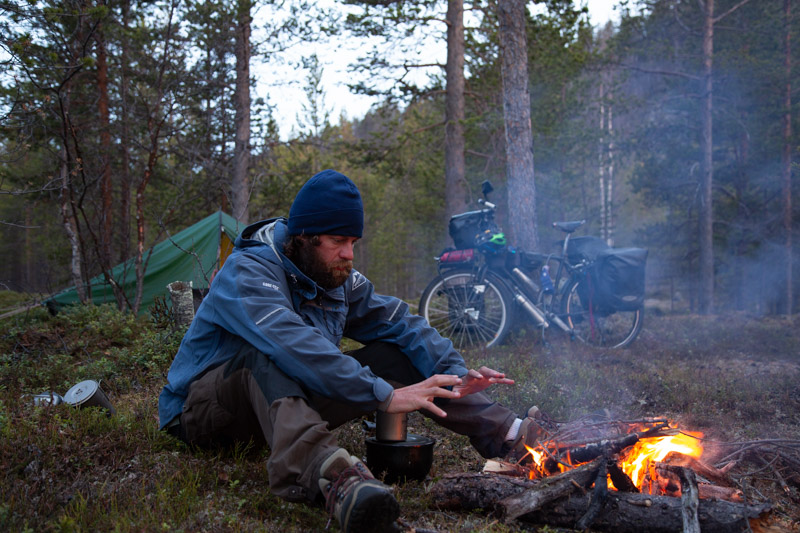


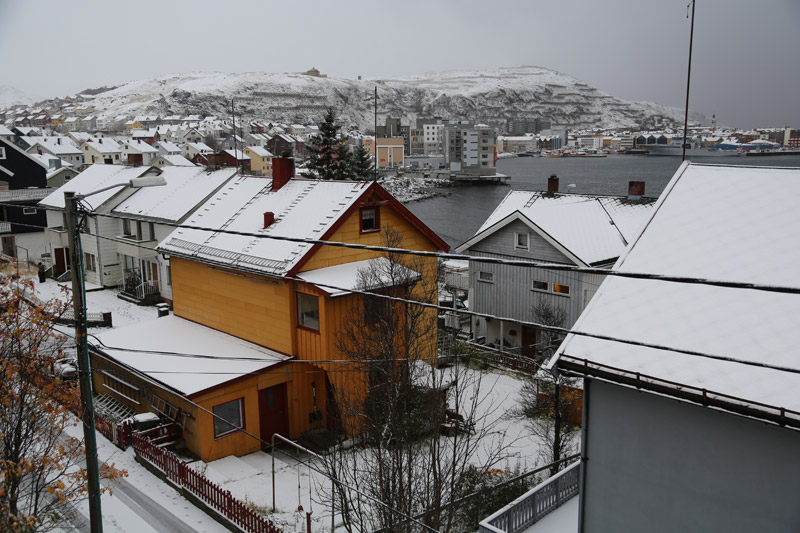
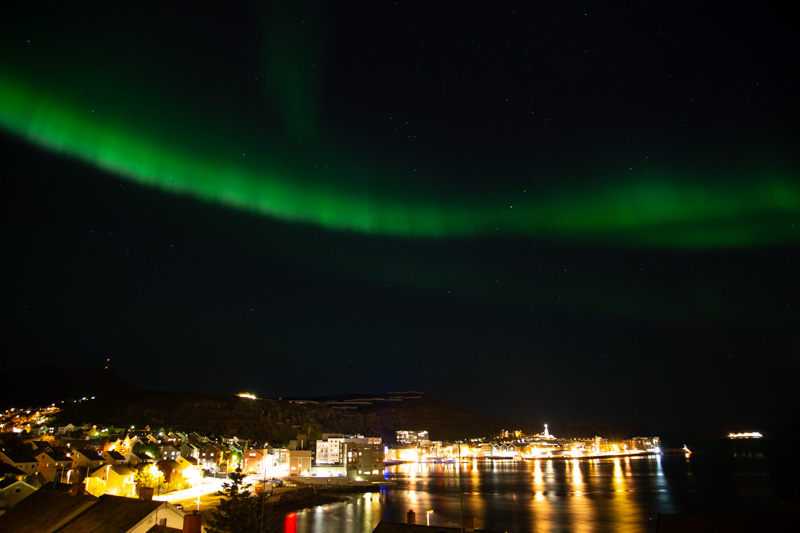

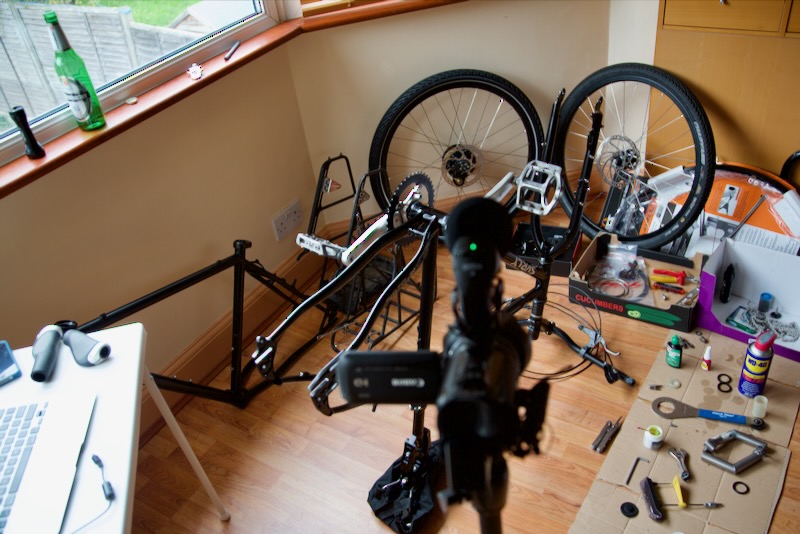
By the end of 2014, I had lost my footing. I’d just spent 18 months in Arctic wonderland, but losing the security of work and home in Norway broke the momentum I had in getting to the next stage. I’d had a good run, arrived halfway round, body intact and mind strong, but as the year came to a close I found myself at a friend’s place in London, marooned and depressed. Things had almost fallen into place, the next stage almost within reach, but dreams, for lack of a better word, don’t fall into place, they need to be kicked and shoved with real intention, and that was becoming a depleting and painful process.
The second half of the planet now presented the Atlantic Ocean, followed by the trans-Americas bike ride (Alaska to Patagonia), and then the Pacific Ocean back to Australia. The problem was, I couldn’t reconcile my vision with the practicalities of doing it. Issue A: I no longer had the right to work in Europe, and I didn’t yet have the funds to buy a yacht with surplus for sailing the ocean blue. Issue B: The rather inconvenient matter of needing to learn how to sail blue water in first place. So that’s what I mean when I talk about being marooned. I couldn’t work out how to solve these issues without it pulling me out of the expedition and costing years of my life, which in the end, is pretty much what has happened.
Of course, I could have shifted the goal, hitched across the oceans, got the job done and moved on, but I wasn’t willing to give up my vision, so I put things on hold, and consequently lost the will to write or edit video of the journey, went AWOL on my blog, and, well, here we are a decade later. That I’ve been in limbo with only half the journey completed has felt pretty humiliating at times, like an old foe on your back trying to settle the score.
Trying to clear out my thoughts at the time (2015), I wrote in my journal:
It’s easy to get lost in a project as bloated and dismantled as this. I sometimes feel like a rock flung through the air, spinning fast and free and weightless until hitting earth with a thud. For good reason, or not, I punish myself for being so inefficient, so recklessly wasteful with time. I try to acknowledging that taking time is not always wasting time, that choice and freedom and plain happiness, whatever form that takes, is a goal, if not the goal. But more often it feels like poor excuse for not getting to where I’m going. I have to find the momentum to dig myself out of the ditch when I’m left immobile, distracted, the goal drifting into fog and away from self-actualisation—What a man can be, he must be.

THE LEARNING SEASON
In 2015, I focused my energies towards my Atlantic campaign. I needed to solve Issue B first and learn to sail, so I took the cash I had and bought an old 28-foot yacht in West Scotland. My friend, Brian, was the only person I knew in the UK who was an experienced sailor, and he advised me on the kind of boat that I would need for the voyage. Being an adventurer and a jump-in-the-deep-end kind of guy, Brian was the perfect mentor for me in those early days. He knew I had limited time and money, and he advised me accordingly.
‘Don’t look for your boat in the Mediterranean, you won’t learn anything there,’ he said. ‘If you really want to learn to sail and you want to sail high latitudes, get your boat in West Scotland.’
The reason the weather is so temperamental in that part of the world is because it is on the polar front, where cold polar air masses converge with warm tropical air masses, resulting in oscillating high and low pressure systems. It also has very turbulent seas, and some of the fastest tidal streams in the world run through those islands and over their lurking rocks. Charts of West Scotland are littered with little crosses marking a long history of shipwrecks on that coastline. It’s as hazardous as it is beautiful, and it requires thorough sail planning to navigate, and so Brian was dead right to send me to that training ground.
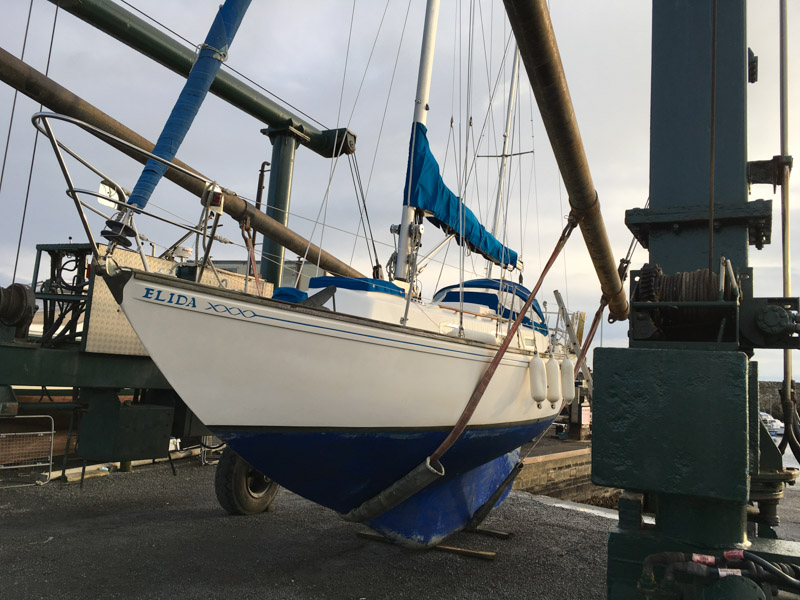
I was alone and essentially starting from scratch, and I was to discover very quickly that when you drop a boat into treacherous waters with little experience, there is no crawling before you walk. I won’t tell the whole story in this post, but just to illustrate my complete lack of knowledge at the starting point, when I launched my boat the first time, I almost sank it. As it was lowered into the water, Mike, the old boy who sold me the boat (cos he was at the age when he needed something a little easier to get around on), went below to start the engine, but a moment later he popped out of the hatch, shouting to the crane operator to ‘lift her out!’. Then I went below to find the cabin had taken in half a foot of water before the boat had been released from the slings.
‘The seacock in the head is open,’ Mike snapped. ‘Jesus Benji, the toilet hasn’t been connected. Give me a light.’ He reached under the head, turned off the seacock then leaned back, resting his ailing body. ‘You have to start taking responsibility of this boat.’
He was freaking out with the prospect of his beloved little boat falling into the hands of a Knucklehead. I’m pretty sure that he would’ve refunded my money on the spot and given his boat away for free to someone he was confident wasn’t going to sink her or run her up a reef. But no, me and Elida were now inseparable partners from this day forward, for better, for worse. And she had just taught me lesson number one: check all holes in the hull are shut before dropping her in the ocean.
I wasn’t completely green though. I had crewed several boats to get from Australia to Southeast Asia, but sitting alone in the dark cabin that first night, with my little boat bitting at her chain, I realised just how little I knew. I was acutely aware that I was in a race—the most critical race of them all—to learn enough to not die, before I actually die. Fortunately, I’m a fast learner.
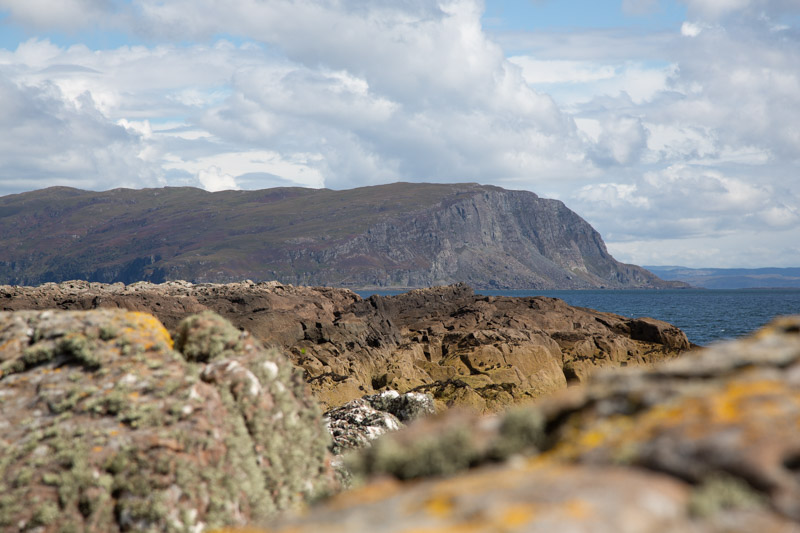
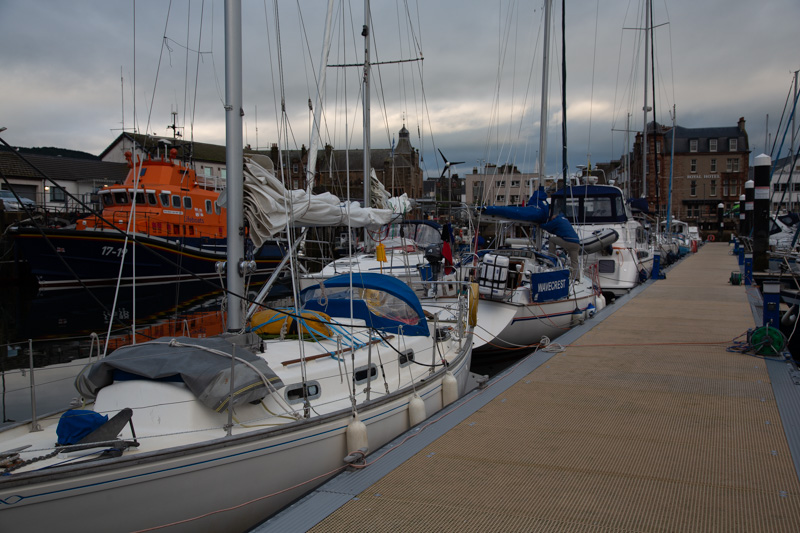
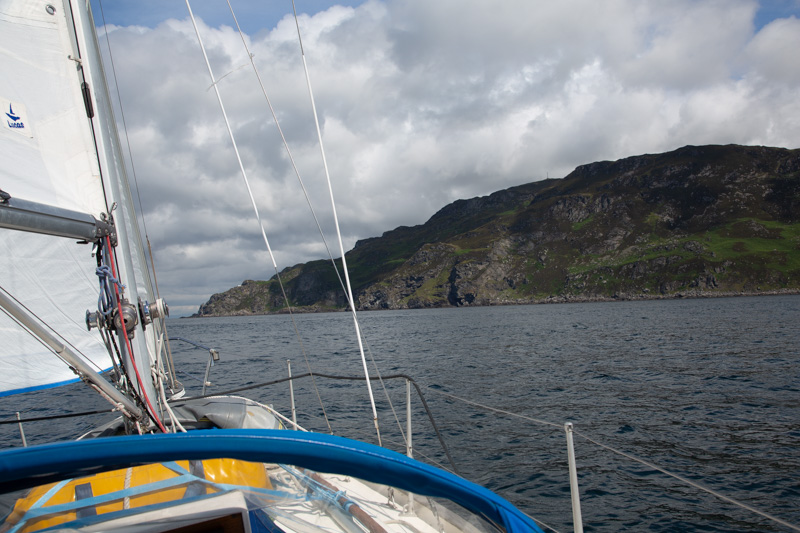
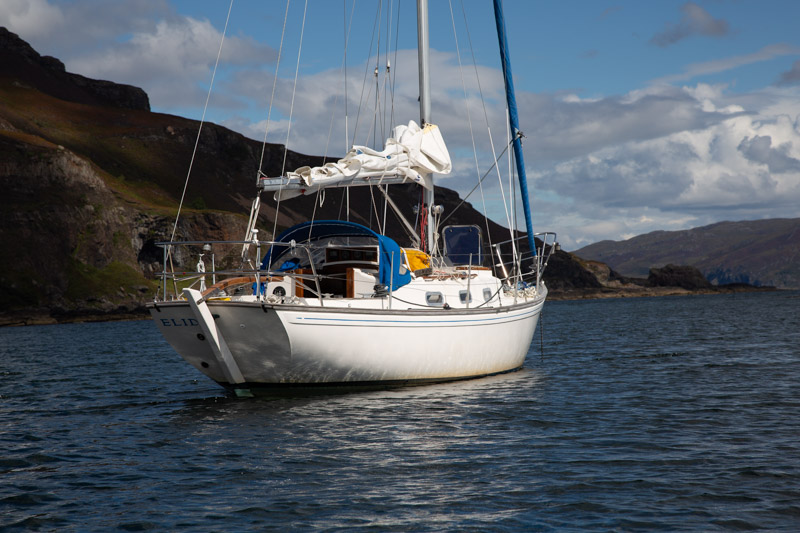


During the next two years (UK rules meant I could only stay 180 days in the year, so it worked out less than a year in total) I sailed all over West Scotland and the Outer Hebrides, learning through trial and error and asking a lot of questions to sailors I met along the way, about issues I was yet to understand. Lars, a friend from Norway, joined me for a few weeks during both years, and we island-hopped up to Stornoway, plotting the route via the world’s finest whiskey distilleries.
Yachties were my best source of information, of course, and in the cruising world it’s generally accepted that everyone helps everyone, but there are also wet blankets out on the docks, whose function in life is to project their limitations onto others. My favourite piece of wet-blanket advice came from a supposed expert sailor, who’d never owned a boat.
‘Your problem is you don’t know, and you don’t know what you don’t know, and you don’t know what you need to know, blah blah blah,’ he said. ‘It comes down to how much you value your life. What I suggest you do is look at your insurance policy and add up the value of all your body parts—an eye is worth this much, an arm, this much—and that’s what you spend on your boat and safety.’
Yeah, right oh. ‘What insurance policy?’

PIGGY WENT TO MARKET
My boat was very basic. It had no auto-helm or self-steering, and no chart plotter. I navigated by paper charts. If I went below, I would tie off the tiller with rope and hope that the wind not change. Understandably, I had a few close calls, near wrecks, and dragging anchors in storm force conditions, but possibly the most notable event didn’t actually happen on the boat.
2016 was to be my learning season, but two months in, disaster struck. A yacht club had generously loaned me a mooring, and I volunteered my services in kind. It was a royal estate surrounded by large gardens, and the club was preparing for a gala event on the weekend. The bosun put me to work mowing the lawns with an ancient, petrol-powered Flymo lawnmower—a notoriously dangerous machine. I came to the embankment surrounding the oval and slipped, did the old foot-under-the-mower routine, and the dirty old blade chopped straight through my boot.
You know that urban myth, the one where people accidentally chop off their toes while mowing the lawn and don’t realise it until they look down? Well, it’s true … for a moment … then the sting kicks in. I lay there for 3/4 of an hour, unsure of the damage I had done, till the ambulance arrived. The paramedics tried to remove my boot, sending a shot of pain through my foot. I could feel my toes pulling loose. ‘Stop!’ I yelped.
‘Keep breathing the oxygen, Benji. You’re not working hard enough. Take deep breaths,’ the paramedic said as he cut off my boot to reveal the fourth and fifth toes on my right foot had been severed. Believe it or not, this wasn’t a new experience. When I was a kid I managed to cut off my big toe in an accident, so three little piggies have gone to the market from my right foot. (Note: All piggies are happily back in the pen.)
I was taken 45 minutes south to Paisley Hospital, near Glasgow. My foot was X-rayed then the wound was thoroughly irrigated. The doctor explained that the damage was severe enough to be first in the operating room in the morning. I was wheeled up to my six-bed room. As I transferred from the wheelchair to the bed, the old boy opposite asked, ‘What have you done, a Flymo?’
Was this guy psychic? ‘Yes. How did you know?’
He pointed to his own sorry foot, and the patient beside me laughed. ‘I was wearing slippers and I never wear slippers cutting the grass. It got my big toe,’ he said.
Flymos may be shit at chopping grass but apparently they excel at chopping off toes, and they’ve built a reputation to prove it. The irony wasn’t lost on those who pointed out the achievement in managing to keep my toes during two Russian winters, only to lose them while mowing the lawn on a fine summer day. Moral of the story: Don’t let fear stop you, since you’re probably no safer at home.
Surgery went well and my toes were pinned back on, then I was in a cast up to my knee for six weeks. The whole episode was very inconvenient, since it had happened in the middle of sailing season, but I was fortunate to stay with my friends, Stewart in Scotland and Brian in England, while I recovered. I couldn’t sail, so I used the time productively and did my Yachtmaster theory course online while I was laid up in bed. It was a month of intensive study, followed by an examination. This taught me the fundamentals of navigation, meteorology, sail planning, rules of the road, emergency protocols, et cetera—all the stuff you do at the chart table. It was something I needed to do before I hit open water in the northwest. All the practical stuff—sailing, boat handling, maintenance—I learnt on the water the hard way.


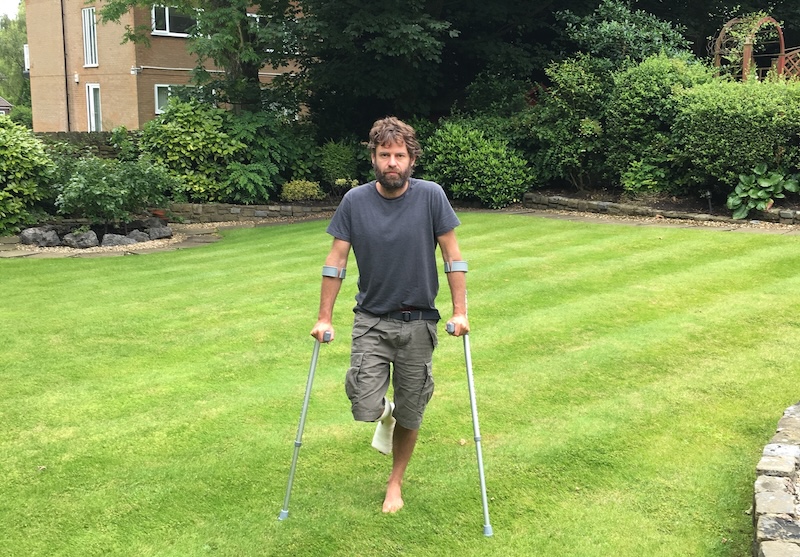
THE END OF THE ROAD
Despite my injury, I managed to salvage the end of the 2016 season, and made the most of 2017. I’d gained enough experience to set course back to Norway en route to North America, but the boat wasn’t ready. She needed about £10,000 worth of modifications and upgrades to sort her out for single-handed, blue water sailing, and I didn’t have that cash. So now I really had come to the end of the road.
My options weren’t great: either cycle the Americas next, using the proceeds from the sale of my boat, but have nothing left to complete the Atlantic and Pacific voyages, or put everything on hold to refinance, so I could complete the journey on my own terms. I had made a deal with myself years earlier to complete the ocean voyages on my own boat, and had just spent two seasons learning to sail single-handed, so there was really no choice in my mind but to put the expedition on ice. (After all, Odysseus was the captain of the ship, so it would hardly be an Odyssey if not.) In November 2017, I sailed down to Northern Ireland, to a little medieval marina in Donaghadee, where I stayed on my boat over the winter waiting for a buyer. This was a real low point, and that cold, grey Irish winter couldn’t have been a more appropriate backdrop to my mood.
After selling the boat, I returned to Norway to make a last-ditch effort to get work there again, but ran into the same work-permit obstacle, so I made the very difficult decision to return to Melbourne in June 2018. Despite how awful that felt after coming so far, the timing would turn out to be fortuitous, considering I was lucky enough to be working during the pandemic when borders shut down. It’s now October 2024, and I’m finally ready to head back to the northern hemisphere to complete what I started all those years ago.
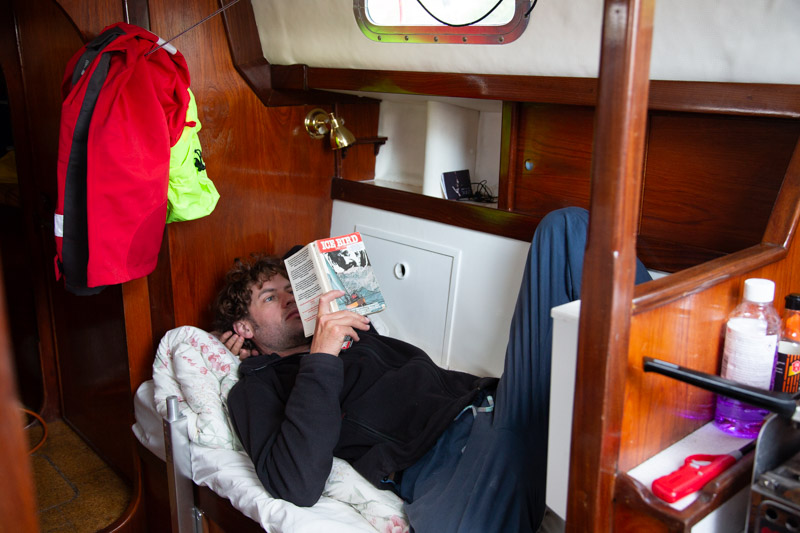
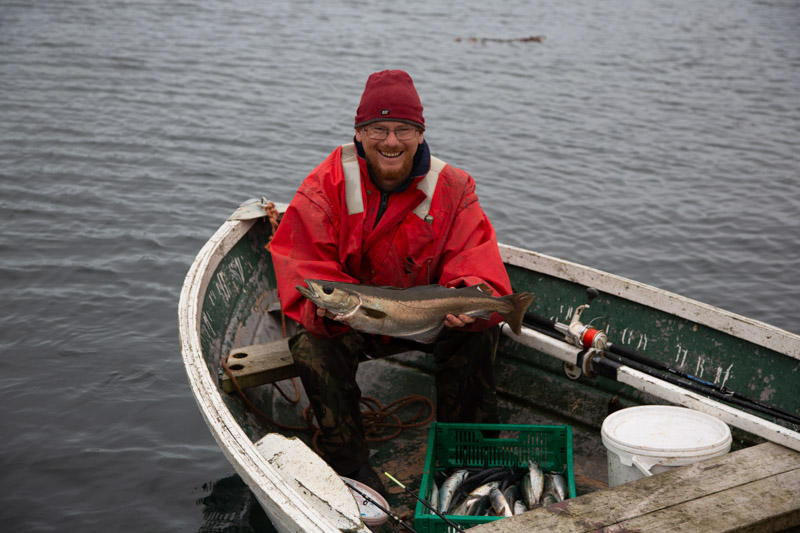
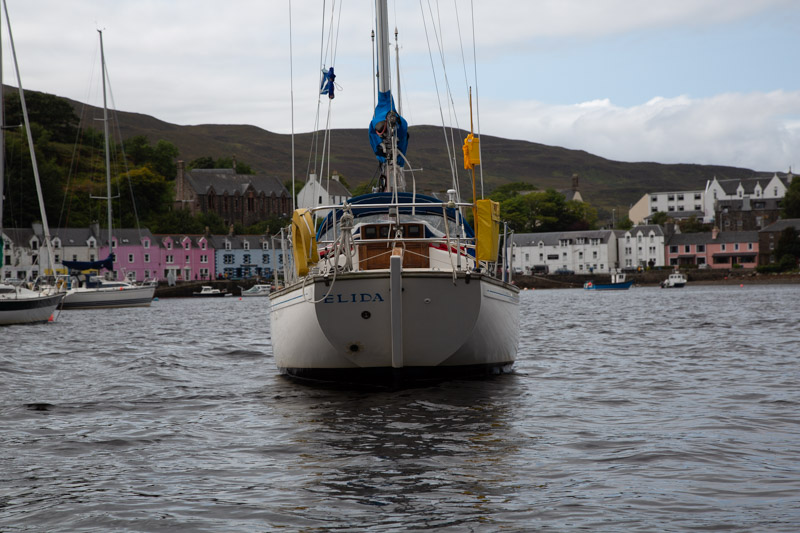


The sad moment of having to sell Elida after she had taught me to sail, and so much more.

LOVE
There’s one more piece of the puzzle to mention, and this is the hardest one for people to understand (including myself) and certainly the hardest one to write about. I won’t go into details out of respect for privacy, so these few lines can’t possibly represent the impact that my personal relationships have had in my life and what they have meant to me.
During the course of this story I was in two very intense and profound relationships. One of these relationships had us both out navigating pretty turbulent waters, and it affected me for quite some time. The other one helped heal me and make me whole again, but they both ultimately failed because of my inability to change my path in life. Leaving a good relationship with someone you love is brutal and confusing. It’s bound up with the inner turmoil of grief and guilt and fear—fear that you’re making a big mistake, fear that you’re losing something irreplaceable, and fear that you’ll never find that love again.
I’ve always had a very clear vision on how I want to live my life. It’s never felt like a choice as such, but rather something that is set within my core. We all have our own needs and responsibilities, and when these are not aligned, it proves to be a very difficult thing to resolve, no matter how much you love that person.
When I fail to attend to my core needs, a part of me goes missing in action. I cannot get to the best of myself, and then she can’t get the best of me either. It’s not easily explained because it’s not easily understood, so I suppose it’s an anomaly. What is wrong with me? It’s an isolating place to be, and there’s no good answer, just a vicious cycle of thinking you need to fix something within your nature and trying to stay true to yourself at the same time. Perhaps that is shameful. Perhaps I should have more ability to adapt myself. At that I have failed. It’s very difficult to change one’s fundamental nature, and I have no idea how to do that without causing damage one way or another. Maybe life will resolve these mysteries in time, maybe it won’t, but for now I am no wiser.
WHERE TO NOW?
As I mentioned earlier, I got as far as Nordkapp, Norway on the bicycle, so naturally the plan has been to get back to Norway and buy a yacht, connect up the route, then sail the North Atlantic.
The voyage planning was quite complicated, and I came to realise it was going to be logistically problematic sailing the Atlantic next. Firstly, there would be the major upfront cost to staying in Europe while getting a boat and doing any required refit. That would set me back at least a season and probably a year, since there’s limitations on how long I can stay in Europe. Then there would be the considerable inconvenience and cost involved in storing the boat for 2-3 years in Canada while cycling the Americas. I nutted out the pros and cons. It was clearly going to save me a lot of time and cash to cycle the Americas first, thus completing all the land sections and leaving the voyaging for last. This would also allow me to find a boat in the Americas while actually doing the expedition.
So the immediate plan now is flying to London in December 2024, to pickup my bike, then to Reykjavík for two-months cycling around Iceland (for some toughening up, and since it’s on the way), then to Alaska in February to begin the trans-Americas bicycle journey.

STAGE 1 [A-B]: Australia to Japan (COMPLETED)
STAGE 2 [B-C]: Japan to Norway (COMPLETED)
STAGE 3 [D-E]: Cycle the Americas from Alaska to Patagonia (this will complete the land sections)
STAGE 4 [F-C]: Buy a boat on east coast North America and sail back to Norway to join [C]
STAGE 5 [C-A]: Sail the viking route west back across the Atlantic, then probably through the Northwest Passage to the Pacific and eventually arriving back in Australia.
CONCLUSION
The point of all this is to give some background, because it’s taken me a long time to update this story and fill in the gaps of stage two of the expedition (Japan to Europe).
The blogs I will post following this update, I wrote while I was living in Norway. I guess I’ve already explained that life got challenging for a while there, and regrettably, I just never got around to hitting the publish button. However, I have to do it now because I’m about to restart the expedition and I need to bring things up to speed.
To the good people who have emailed me over the last few years to check for sign of life and to ask, ‘Are we ever going to arrive?’, I apologise for the delay.
With that in mind, Russia is a big country and these next blogs are long. They cover the missing story on the western half of Russia. If you get through it, I give you permission to check a novella off your annual reading goal, and I thank you.
Benji R-W, Oct 2024


 Earth Odyssey Expedition
Leave a reply to Arthur Kirkpatrick Cancel reply