
Tasseled, crimson cloth draped around the windows and Buddhist insignia dangled across the windshield. It seemed oddly placed in a Russian vehicle.
I hate buses!, I thought, watching from the front seat as the driver veered off course while texting on his mobile, and drove half a kilometre down the suicide lane. It made me nervous that these were the characters I was sharing the road with, but at least in this case the driver received a smart slap over the back of the head from a passenger before making wreckage of the lot of us.
Four hours back north from Khabarovsk, I was left with my bike and bits piled in the muddied snow slush at the remote roadside cafe, 5 km from where my rear wheel blew out. With a rebuilt wheel, a juicy 3-month Chinese visa in my passport, and a pannier full of food, it was back to the old routine of lighting fires up bush tracks and cooking gourmet extravaganzas such as porridge infused with woodsmoke.


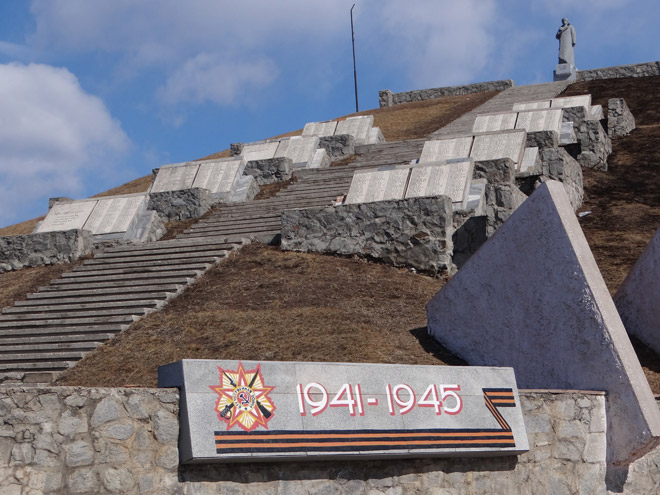
There was a lot of military presence: uniforms, barracks, training compounds, armoured vehicles, artillery, war memorials and revolutionary monuments—usually depicting battle scenes or victorious heroism.
One day I arrived at a barricaded town guarded by troops and a boom gate. I really needed a wash but with nowhere to stay was turned away by the guards. However, as I was about to cycle into the dusk, muddied and exhausted, a girl from a roadside kiosk called her friend who escorted me through the checkpoint to a military residence dormitory—a multi-storey concrete building. The frigid, gloomy environment on the outside, reflected on the inside where dour army wives shuffled about the corridors. A boisterous child being disciplined, boomed through the corridor from one of the rooms at the west end. This was not a place for civilians, least not foreigners, but I was welcomed warmly by the girls at reception who were amused by my odd presence. They gave me a key and charged me 4 roubles but dropped it to 2 roubles for a 12 hour stay.
I woke to heavy wind gusts and rattling windows. Powder snow spun in the drafts weaving through the complex. Despite the snowstorm, and my lack of motivation, if the winds were northerlies I’d ride, and through my fourth-story window I could see the wilted oak leaves rustling in the right direction.
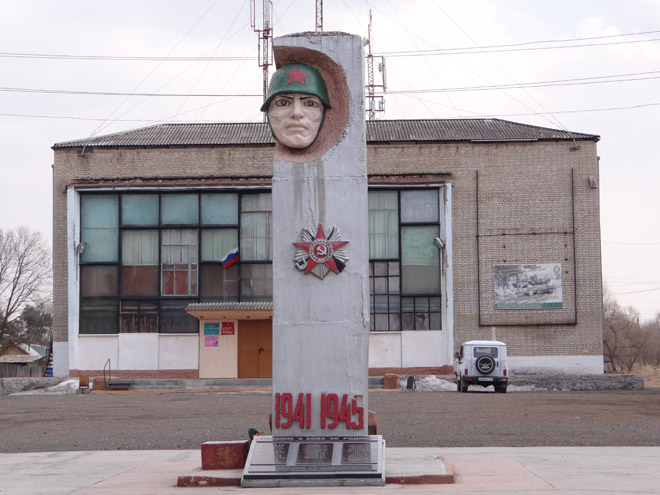

One of the many compounds.
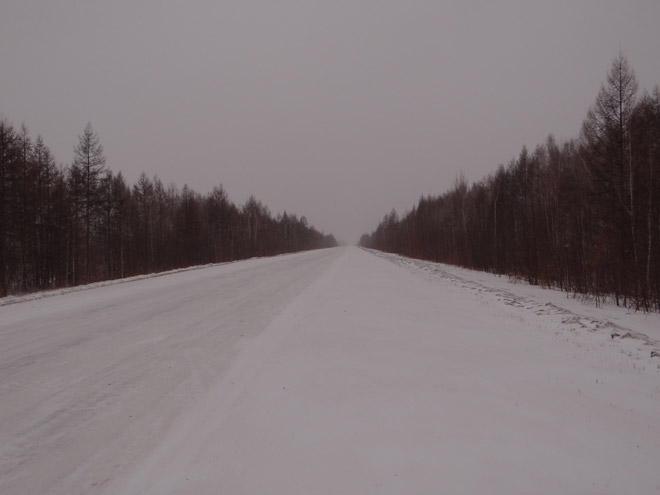
Outside in the blizzard, I strapped my bike together unenthusiastically but I felt rather special as I was saluted exiting the gates. I speed with the northerlies downhill, my rear wheel slipping perilously through the snow flurry and ice. This would be the last real snow fall I would see for the season but I was relieved I had changed only my rear tire and left the front studded—without a gripping front wheel it would have been unridable.
My detour around Khabarovsk brought me to a mobile police cabin stationed out in the bush. I was ushered into the cabin—sweltering from the wood stove—my mug filled with tea and given a large bag of sweet biscuits by the two policemen. I spent an hour there communicating poorly and rehydrating. They kept encouraging me to eat as much a possible. The occasional truck driver stopped by to get a document stamped. The next village was 30 km and the police told me emphatically to take the detour around town as there were banditos there. It was on that detour that I got hassled by a car full of drunks and despite my efforts I couldn’t shake them. They returned three times, accelerating behind me and skidding to a halt over the ice road. Eventually I flagged down a passing 4×4 and told them I was being hassled by banditos. They weren’t, but I figured it would send the message, and it worked. With that they gave me an apple to apologise then zigzagged away.
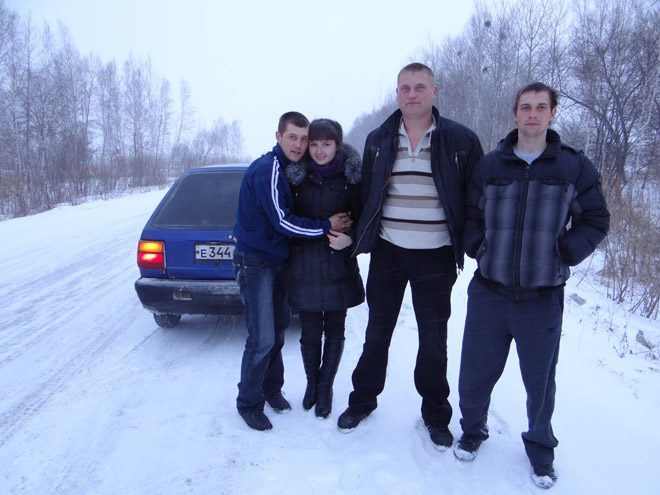
Shortly after another car pulled up beside me. The driver called out ‘Benjamin?’ and asked if I needed anything. I figured he knew me either from the Police or the news. Then once again a car with three young men and a girl stopped. They jumped out with cameras, saying something about ‘T.V.’ and asking to take my picture. This happened several times over the weeks and it felt odd, like attention undeserved.


250 km south of Khabarovsk I came to my first Russia-China border crossing but I had just missed it by three days. The two countries are separated by the Amur river and the three closest international junctions to the capital of the Far East are unbridged, thus they are only open and passable in the winter while the ice is strong enough to take vehicles.

So close yet so far.
The winter sting had eased but the chill of salty, watery nasal mucus continually running into my mouth, reminded me that it was still cold. With the change of seasons, snow slush turned to muddy puddles in the cracked and chunked out roads. Russian Far East roads are built to bare minimum requirements—rarely is there a shoulder and the bitumen is spread so narrowly that the road lines are often lost in the dirt.

By early April there was little snow cover left. The birch forests dwindled, in parts, into parched and overgrown grasslands that blew horizontally with the seasonal northerlies.

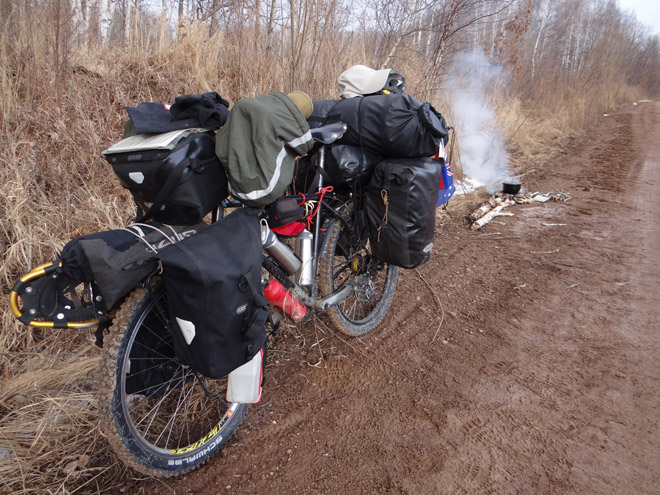
I became very efficient at cooking by fire.


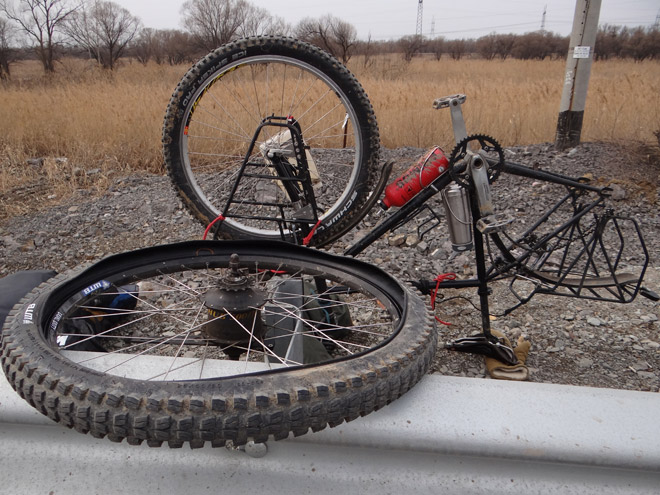
Bloody punctures!

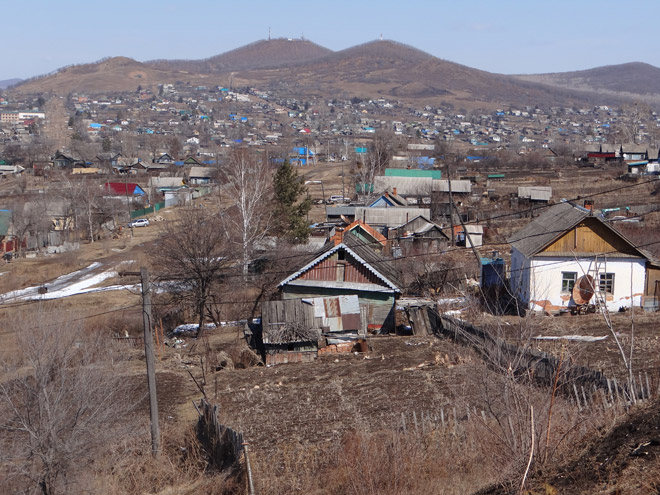
Little snow left but still cold enough to freeze rivers.


High school girls helped with direction.

As I now had an added 475 km to travel to the next border crossing, I decided to visit Vladivostok. 300 km south I came to the turnoff west for China. To speed up the detour, I hitched a lift in a dump truck 200 km south to Vladivostok and two weeks later caught the train back to the same point to resume the journey.
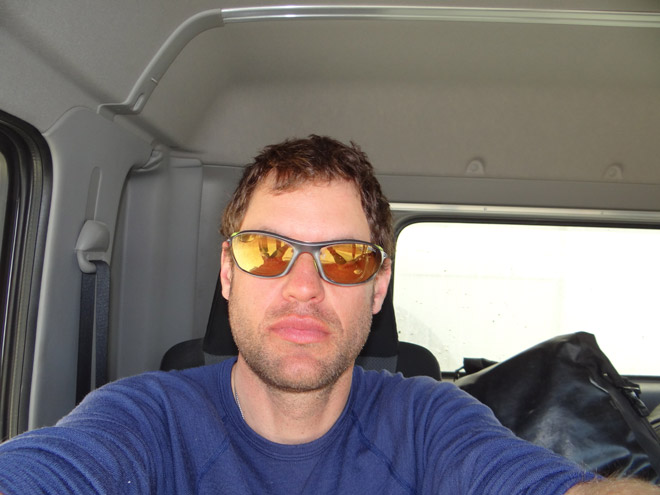
Thanks Vacili for the ride.

Vladivostok is the international sea port of the Russian Far East. It’s been a dream destination for no other reason than it is one of those end-of-the-world type places. Vladivostok is the termination point of the Trans-Siberian Railway—the longest railway in the world.

View from my room.


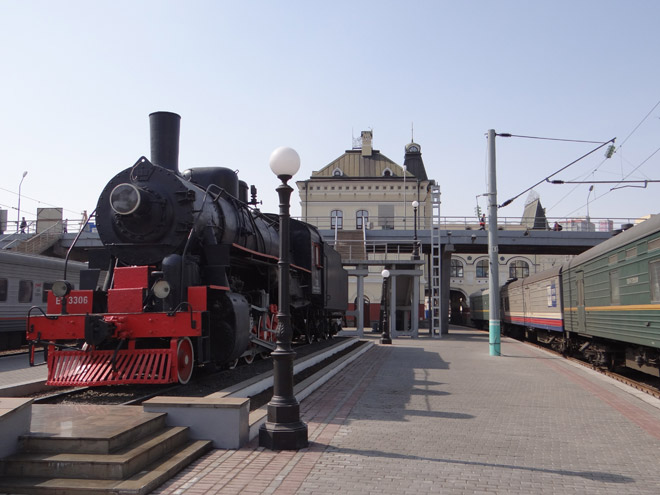
A steam engine marks the end of the Trans-Siberian Railway.

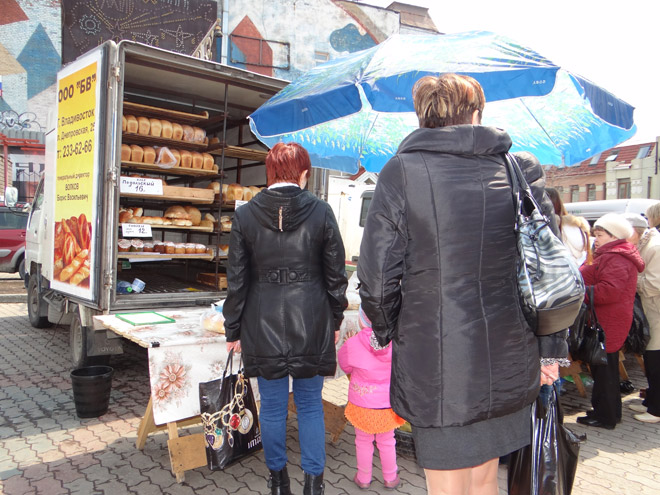
The first night there I stayed in a dusty-grey Soviet hotel. The crummy old room facing the rear of the building was pretty grim so I asked reception to move to a room with a seaside view.
‘Yes. Not today. We don’t have any rooms, but tomorrow,’ the receptionist told me.
‘OK, can you remember me?’
‘Yes, I know about you. I’ve read about you in the newspaper.’ she said.
‘Really? Here in Vladivostok?’
‘Yes, and in Khabarovsk, and I’ve seen you on TV and on YouTube. You are very famous.’
It always felt strange to hear this stuff, like people were talking about someone else, but it did add up. I was the only one out there on a bike in winter and, despite a good friends disappointment that I ‘can’t say that I left at least a finger or toe in Russia’ I did survive it with out injury.
With winter behind me, one of the best things about making it to Vladivostok was the opportunity to offload my winter gear, which added up to 13 kg and a lot of bulk. That included studded tires, snow shoes, arctic boots, down gear, head and hand wear, and a heap of winter woolies.

This wasn’t all my winter gear, just the stuff worth keeping. Although I input the coordinates of the Tatar Strait crossing before leaving Japan in case of whiteout, I never turn on the GPS, as the clear days allowed for use of map and compass.
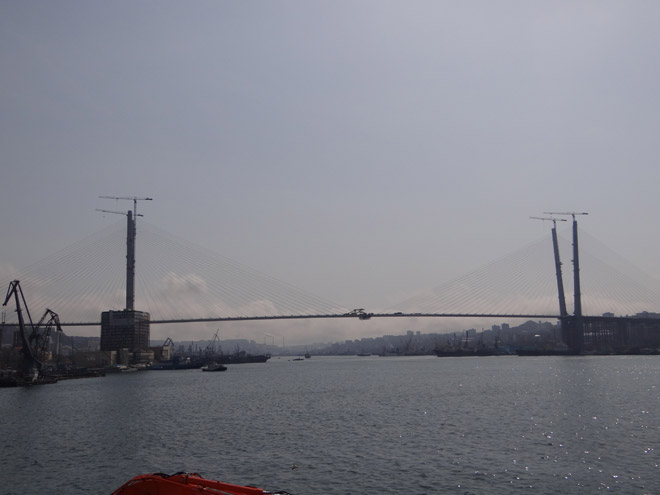
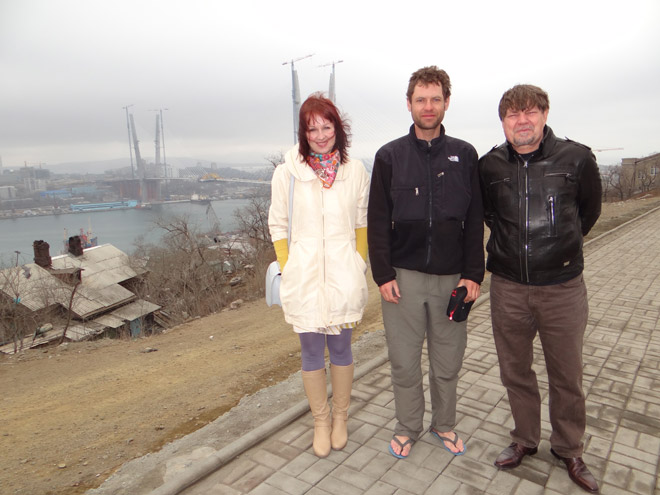
Two impressive bridges are nearing completion.

For the two weeks I spent in Vladivostok I met quite a few Vladivostokians, and for a short time had something of a social life. Generally I take cities in small doses but they do occasionally offer respite from the strain and isolation of solo travel.
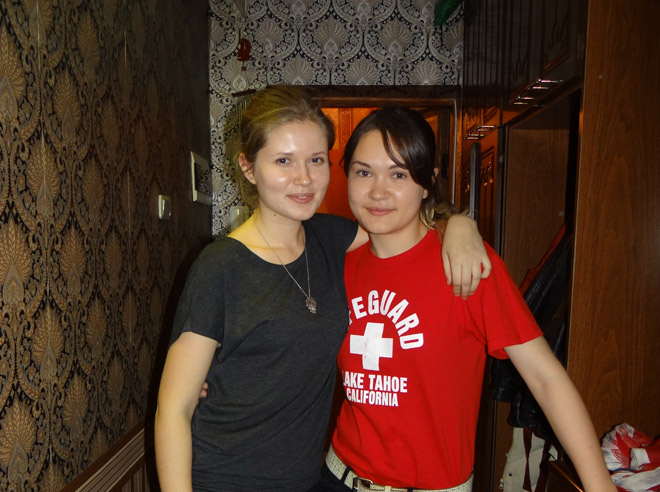
Vladivostok must be one of the easiest places in the world to make friends…
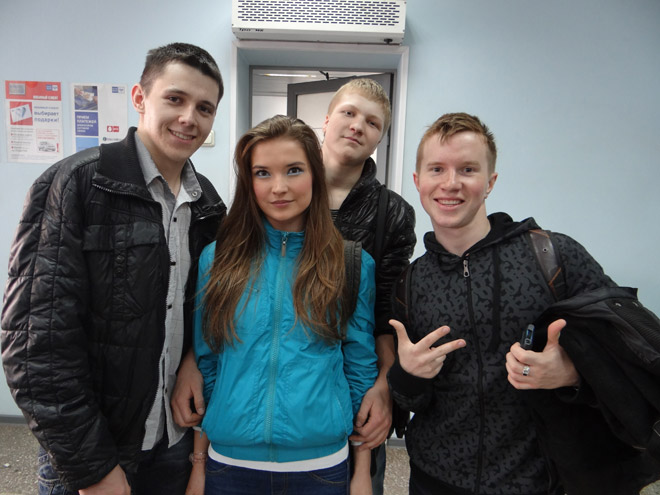



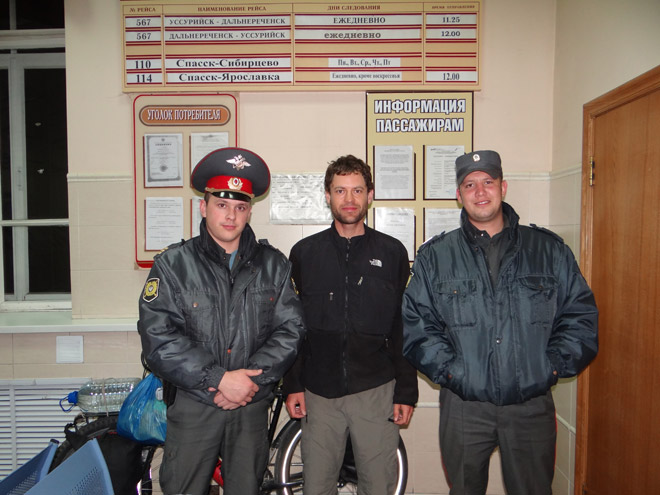
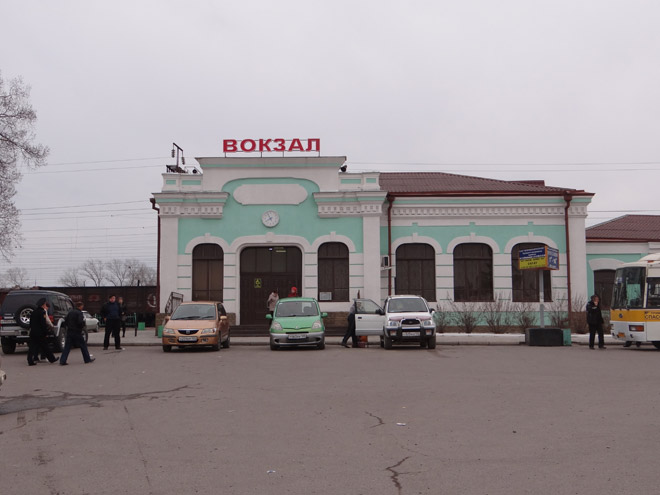
Back on route, the train arrived late so I crashed the night in the station. Security were friendly and two cops showed up and snapped pics.
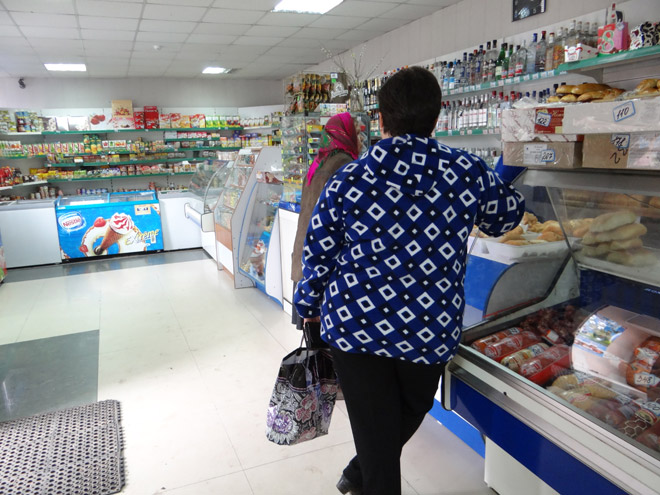
Theft means no self-service in the village store. Sometime you have to wait in lengthy cues as each individual item is picked from the shelves by the shopkeeper. Still, compared to China, I miss the better food and greater choice of the Russian store. Notice the Vodka front and centre.
The conditions were horrible: drizzle, headwinds, heavy Vladivostok-bound traffic and barely a scrap of shoulder. I regretted being out there with every vehicle that screamed dangerously by. Then I got a double puncture on the rear wheel around 4 P.M. and spent an hour on the laborious task of unloading the bike, removing the wheel (troublesome with the setup of my gear hub), digging out my repair kit and patching the tube—a task made more difficult with only one tire leaver (and a screwdriver); the other two had snapped like twigs in the cold as with every other plastic thing.

Rubbish and smashed glass—the tire’s worst enemy—is ubiquitous, particularly around public places: bus stops, stores, memorials, etc. I had to walk these areas to avoid punctures. People threw trash into the bush when they stopped to talk with me. I passed trailer loads of trash dumped roadside, rest areas littered with Vodka bottles and food tins, and so on. Littering isn’t a taboo.

A radical idea, and sadly the extent of the anti-litter campaign I saw in the Russian Far East. I hate to imagine what’s revealed when the snow melts.

100 metres down the road.
3 km on I stopped at a road house, where I met Igor, the head mechanic of the garage. He invited me to his office and bought me cheese, sausage and bread.
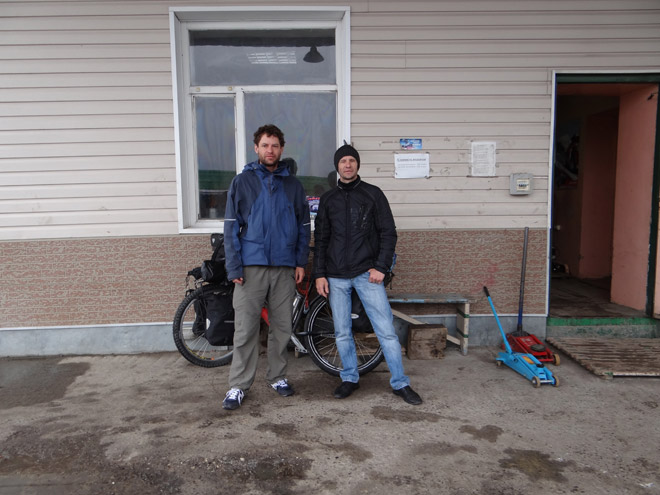
Igor at the garage.
Friends of Igor’s, Nastya and her boyfriend Roma, arrived and drove us to Igor’s house, where I was invited to stay. Igor’s wife cooked delicious roast pork for dinner and as Roma was taking off his jacket to join the table, Igor pointed out Roma’s handgun worn in a chest holster, and said something like ‘Don’t be alarmed. It’s just for protection.’
‘It was one of my goals in Russia to fire a Kalashnikov, but I never had the chance.’ I told them, a little disappointed as it was likely my penultimate stop in the Russian Far East.
Nastya translated this to Roma, then bingo! ‘Roma has a Kalashnikov,’ she announced. ‘He will take you out tonight and you can fire it.’
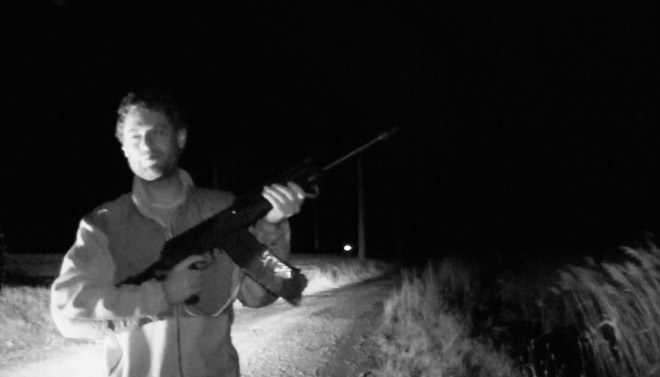
After dinner, Igor, Roma, Nastya and myself drove out to some dark and deserted patch of grassland by the railway. The gun wasn’t actually a Kalashnikov but a Saiga 12K, which fires shotshells, but it is essentially a (Russian) copy, incorporating the same mechanics and design as the assault rifle.
In the dead of night, the headlights of the idling vehicle burning into the darkness, the shotgun booming into nothingness (I think), I realised with satisfaction that I had achieved all my Russian goals.

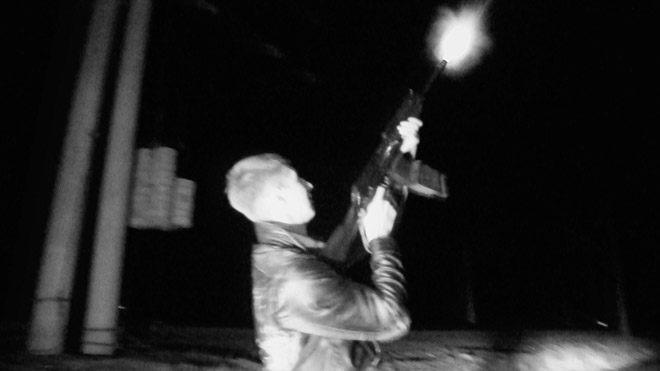
Roma letting it go, above. Me, below.

Cycled through some pretty grim places.


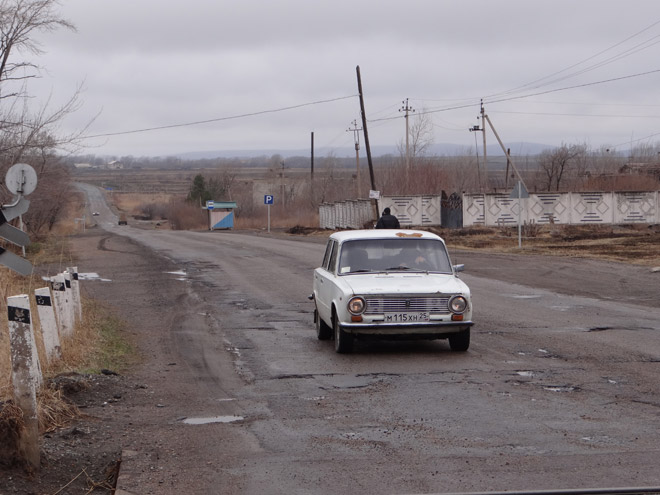


To escape the traffic, I took a 120 km back route to a less used crossing. Another drizzly day turned the mostly unsealed roads to sluggish mud, but it was far better being rid of vehicles. It was a big day ending at a military town at dusk, 30km from the border. The road ran between rows of disused and crumbling military instalments. The national flag and other military banners sagged at the gates of barracks.
I found the only café in town. They are called cafés but are more like a hybrid dinner-nightclubs with glittering decor. I ordered some food. By the window, I slumped exhausted at the table with a cold beer in hand, my eyes fatigued and out of focus, dance music blaring at painful levels. The seats fill around me with a group of retired officers determined to welcome a traveling stranger from a place too far to know. More food was ordered on my behalf and two fresh bottles of vodka whacked down on the table. There were a dozen or so soldiers getting pissed and in their inebriated state, kept coming up to me to chat and take pictures. I was 45 km from the border, and with my departure from this wild country imminent, and the challenging but also gratifying experience of travelling it coming to a close, I aborted my planned night ride to the border town for an impromptu farewell party.
After a few beers and several shots of Vodka, I followed the men in a little hatchback back through the village to a huge military compound that consumed half the town. I was surprised the guards let me pass into a militarised zone. Through the gates, following the little car that kept getting bogged, I was dodging and slopping through mud puddles past the mass of apartment blocks.
The dormitory was quite clean and well built, of higher standards than most buildings I had entered in this country, but his room was a shambles. I asked to use the washing machine, shoved in the corner of the kitchen, so he rang his wife, who lived elsewhere, to learn how to use it. As this failed he shove the phone in my face saying something along the lines of ‘You figure out what she’s saying’. After five minutes of chatter from a lovely sounding but incomprehensible Russian woman, I tossed the phone back.
‘Look,’ I said, ‘this one’s sticking out; it’s the power switch. This is the biggest button; it’s the go switch’. Bam! The machine jumped to life. My host was delighted that I got the thing going until the pipe burst out off the sink gushing litres of scummy outwash all over his kitchen floor. I was in for a long night and all I wanted to do was crash.

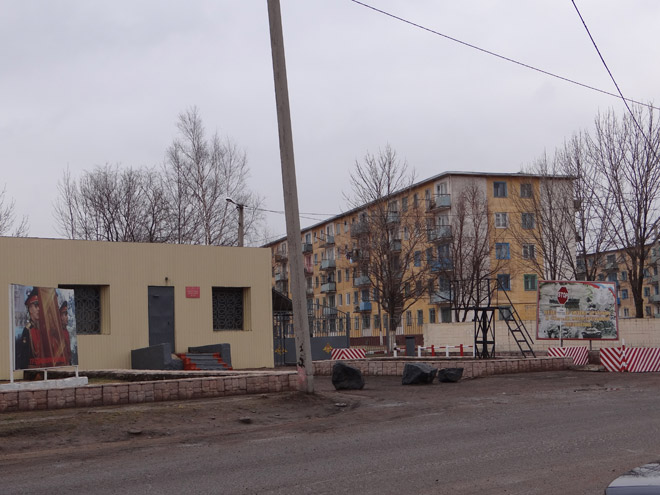

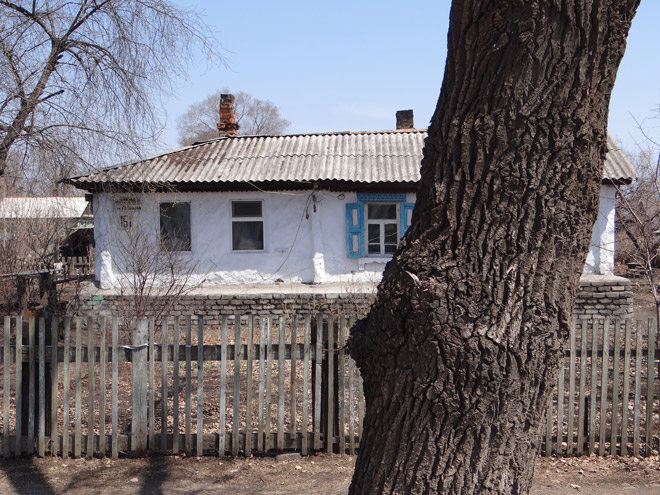

I woke sporadically to the chants of marching troops resonating through the walls with impressive intensity. On the dot of 9:00 I was shaken alive by a austere young soldier—seemingly unhappy with his appointed task—who signalled that my time was up. I could barely open my eyes and he stood watching over me like I was under house arrest. I threw my gear together in minutes and took the long, chaperoned, walk out of the compound. It struck me how beautifully kept the grounds were.
30 km of partially sealed roads cutting through charred grasslands to the border town and a further 15 km of the same nothingness to the dusty Russian-Chinese gateway. I felt encouraged by the strong tailwinds, regarding it as a sign of luck for my second journey in China.

A big thanks
As this is my last dispatch from the region I send my sincere thanks to the many wonderful people of the Russian Far East and also members of the Rotary Clubs of Khabarovsk and Vladivostok for your support and friendship, and for playing a part in this unforgettable experience. I regret I’m unable to credit everyone in my blog—as is the case with every country—but I don’t forget. I hope you continue to follow my trip and email me sometimes.


 Earth Odyssey Expedition
Leave a reply to Kev Cancel reply